
Austin Court Docket Searches
For a state court case, an Austin court docket search runs through Minnesota Court Records Online, or MCRO. Use it for a state court case. Pick Name, Case Number, Citation Number, or Attorney. Then select Mower from the specific county court locations list. That filter matters. Austin is the county seat. But the venue is Mower County District Court, and no separate Austin court database exists behind an Austin address.
- Start with an exact name, a court file number, or a citation number for the Austin matter.
- Select the likely case category when known and choose Mower as the court location.
- Open Case Details to read public case information, the register of actions, hearing entries, and available documents.
- Use the hearing, judgment, or document search when the Austin question is limited to that specific record type.
- Ask Mower Court Administration about a missing, older, restricted, or certified Austin record rather than treating a zero result as proof that no case exists.
Pending criminal matters without a conviction may not appear in a defendant-name result. That gap has fixes. For an Austin case, try a case number, citation number, or attorney search. You can also use the courthouse public-access terminal. Write down the Austin search date and filters. Online results shift as court events are entered.
Austin Court Access Point
Austin is the Mower County seat and home to Mower County District Court. The court holds original jurisdiction over civil, family, probate, juvenile, criminal, and traffic matters filed in the county. Some people call the courthouse the Mower County Justice Center. Either name points to the same building. What Austin offers is an in-person access point. It is not a second county court or a separate city docket. How do filings reach the court? The Judicial Branch's southern Minnesota e-filing information describes the statewide rollout. Minnesota eFile and eServe exists for filing and service. It is not for public case lookup. To read an Austin docket, start with MCRO or Court Administration.
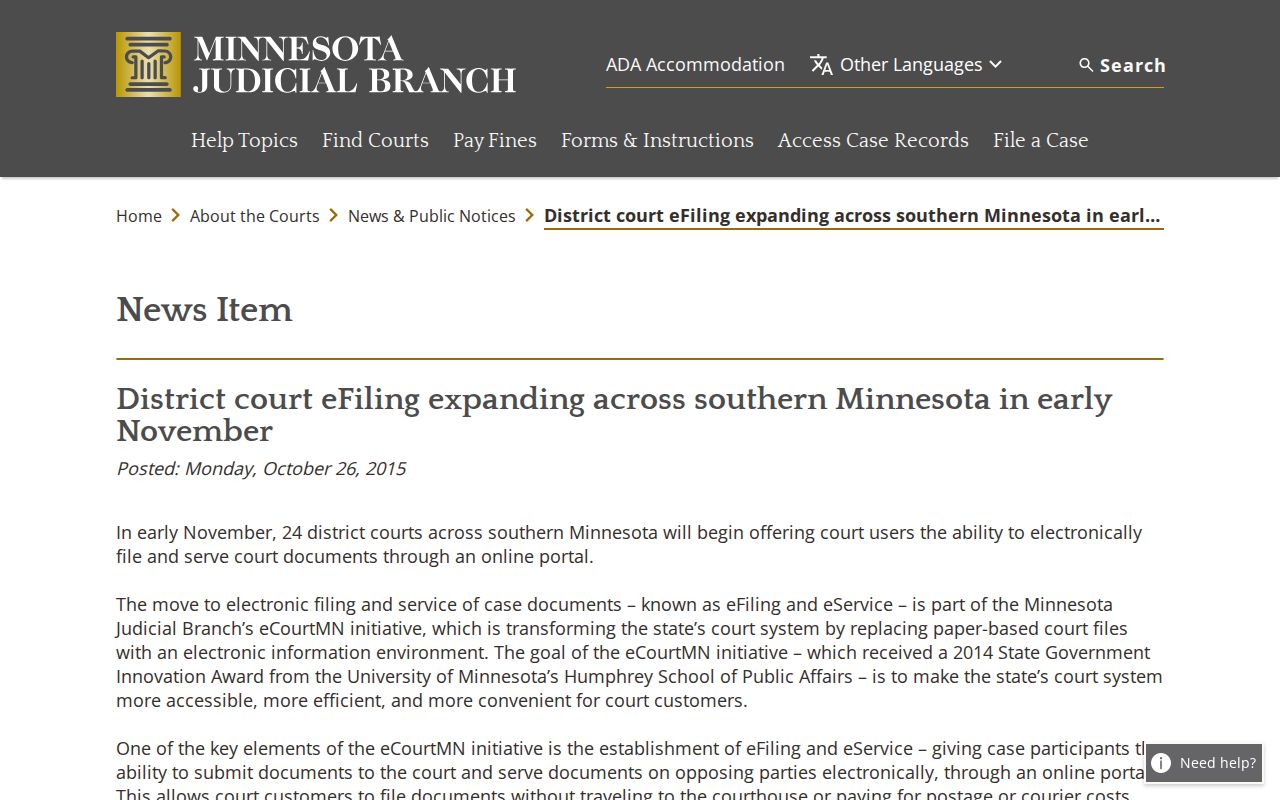
That distinction helps keep an Austin filing workflow separate from an Austin public-record search.
Inside the Austin Municipal Court
Minnesota's Judicial Branch directory lists no separate Austin municipal-court portal. There is no municipal judge. And there is no Austin city docket. So what? The documented route for any court-filed Austin matter is Mower County District Court. That is a statement about the directory, not about local enforcement. Austin may still enforce city code through other means. It simply publishes no municipal court docket. An Austin city clerk may hold administrative records, ordinances, and data-request material. Those are a distinct lane from a district-court file. A filed civil, criminal, traffic, family, probate, or juvenile question belongs elsewhere. It goes to MCRO or Mower Court Administration. An Austin code or city administrative question may belong with the city instead.
Austin Court Record Custodians
Start with the right office and Austin court records fall into place. Court Administration holds the district-court file. Questions about a case number, certified copies, or access to a paper file go there. The Mower County Recorder takes a separate route entirely. That office keeps recorded legal instruments rather than the district-court docket. Austin City Clerk records are a third path. Other city administrative data sits there too.
- Austin City Clerk
- Custodian for city administrative records and the Austin data-request path.
- Mower Court Administration
- Local court contact for Austin-related district-court case files and court copies.
- Mower County Recorder
- County custodian for recorded and filed legal instruments, distinct from court case files.
The Mower County Recorder office runs a recording research service for county documents. That is separate from a search of Austin court records, which live in the court system rather than the Recorder's rolls.
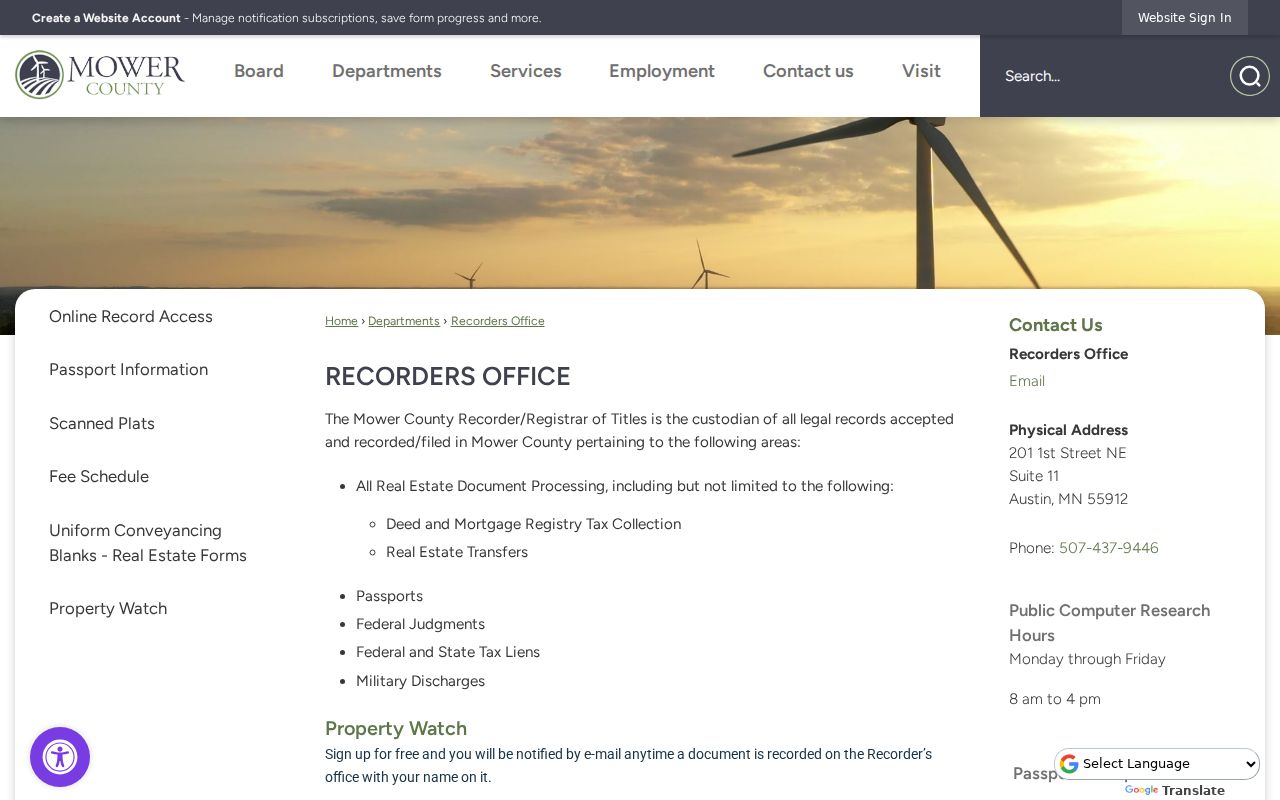
A recorded county document and an Austin court file are different things, and the Recorder's own service page draws that line clearly.
Finding Austin Court Dates
Austin hearing dates can be checked through MCRO Hearing Search. The official Mower daily calendar is another option. Hearing Search takes a name, case number, judicial officer, or attorney. Date and county filters narrow it further. The daily calendar is only a schedule. It is not a full docket, and published entries can change.
| Hearing location | Identifies the Austin-area courtroom or listed remote session location. |
|---|---|
| Hearing date and time | Shows the scheduled Austin court setting, not a final case outcome. |
| Judicial officer | Names the assigned judge or referee when the calendar makes that field public. |
| Hearing type | Describes the listed event, such as an appearance, motion, trial, or other setting. |
| Connection type | Shows an in-person or remote label, subject to court direction and change. |
| Case number | Provides the court file identifier that can be used in an Austin MCRO search. |
Need the most current daily calendar? Check the printed versions posted outside courtrooms or in public lobbies. That display is the freshest listing of Austin court dates. One caution applies. A confidential or nonremote case may be left off. So a missing name does not confirm that a hearing was canceled.
Austin City Hall and Court Files
Austin City Hall sits at 500 Fourth Avenue NE. The Mower court venue is a separate office at 201 Second Avenue NE, Suite 3. Brianne Wolf is the listed city clerk. City Hall offers a Minnesota Government Data Practices Act request route. That route works for an Austin city record. It will not pull an MCRO docket or a court-certified copy.
The Austin administration page gives the city-government contacts for a records request. Use it to tell city business apart from the court file. Do not send court-file requests to City Hall.
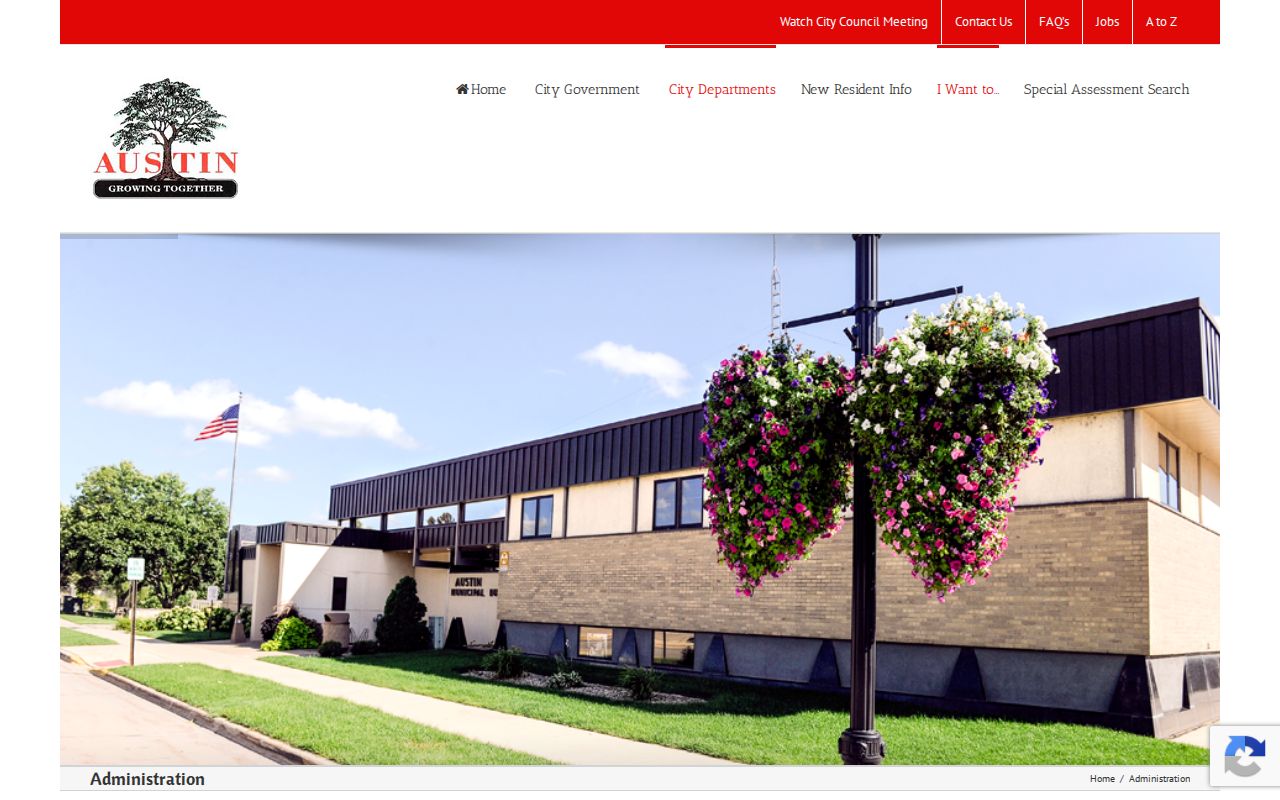
Two separate offices explain the split. One Austin event can generate a city administrative record and a different court record at the same time.
Austin Traffic Ticket Lookups
Hunting an Austin traffic ticket? Start with the citation number. You can run it through MCRO or the Minnesota pay-a-fine and citation portal. Keep one thing straight, though. A citation number is not the same as a Mower court case number. Mower case numbers begin with county code 50-, and the case type matters too. A payable violation often carries a VB type. A mandatory-appearance criminal matter commonly shows CR. Officers get up to seven days to file a citation. If more than seven days pass, the court guidance says to contact the payment center. Once the ticket is filed or entered into MNCIS, you generally must pay or schedule an appearance within 30 days. You keep the right to appear, though. Be careful before paying. Payment counts here. The official guidance treats payment, even a partial one, as a guilty plea and a waiver of trial rights. To contest a Mower citation, contact the local court.
Austin Ordinance Record Route
An Austin ordinance issue does not always open a Mower County criminal docket. The city code uses administrative-citation and civil-penalty mechanisms in at least some code-enforcement settings. Those are city matters. A city-clerk inquiry may fit better than a court-file search. The right route depends on which agency created the record and whether a case was ever filed. For city data, start with the Austin city data-request form. That official page takes municipal record requests. It is not MCRO. Nor does it replace Court Administration when an Austin matter has a district-court file.
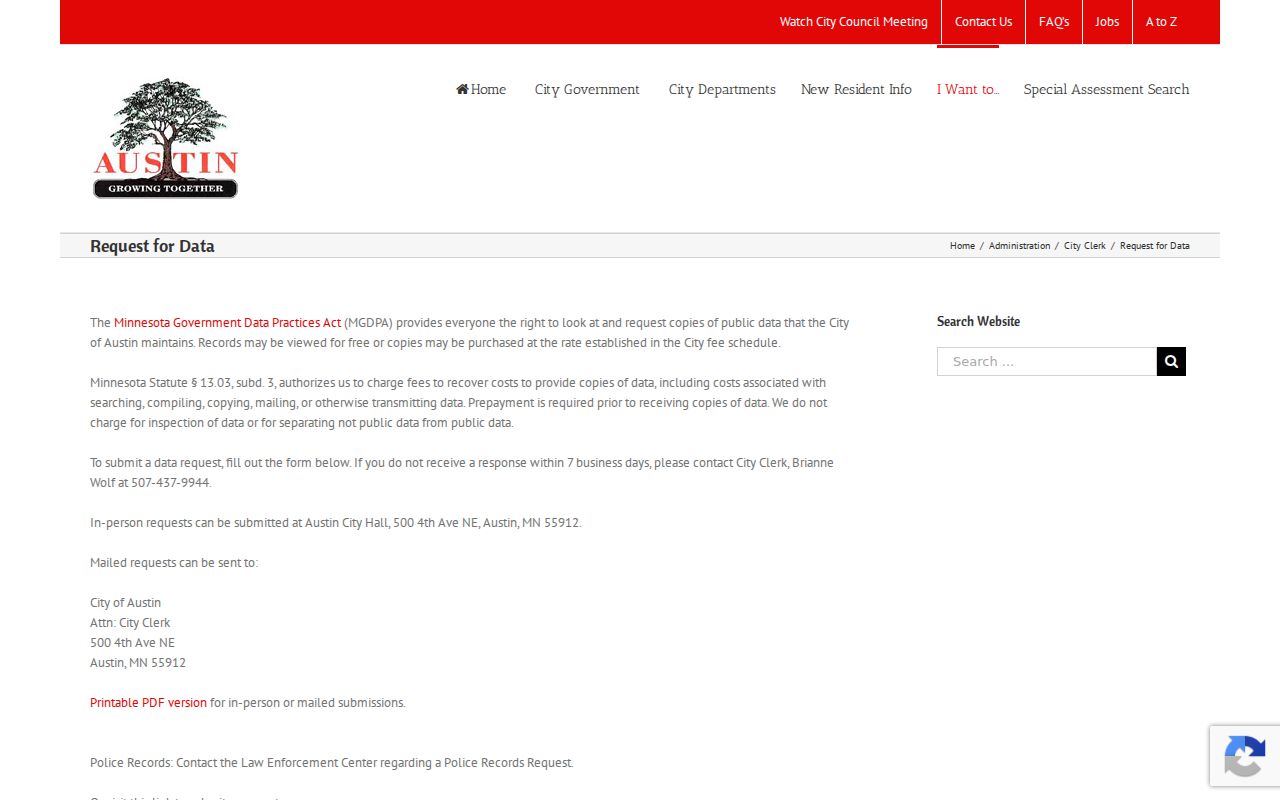
The Austin request page earns its keep here. It keeps a city-code record clearly apart from a public Austin court docket search, so a requester knows which office to press.
How Austin Cases Reach the County
Mower County District Court tries everything here. That means Austin-related matters filed in Mower County. The court hears the county's civil, family, probate, juvenile, criminal, and traffic cases. A city name on a report, citation, or address does not change venue. Venue stays with the county. Appeals go up to the Minnesota Court of Appeals, with the Minnesota Supreme Court reviewing the few matters that reach it.
Docket flow: Austin city administrative record or enforcement question › Mower County District Court file when a case is filed › Minnesota Court of Appeals when an appeal is taken.
Want the wider picture? The shared county venue and search routes are laid out in the Mower County court docket overview. Austin remains the local access point, but its court records live in the county district-court system.
Austin Court Copy Requests
Need a certified copy of an Austin court record? Go through Court Administration in the county where the case was filed. Do not go to Austin City Hall. The statewide Copy Request Form walks you through it. It asks for requestor and case details. It also asks for document descriptions, copy type, and how you want delivery. A letter works too. Just confirm submission and payment details with Court Administration first. Plain copies are listed at no fee on the statewide form. A certified copy with raised seal runs $14 per document. An exemplified copy with judicial-officer or court-administrator signatures costs the same $14. Want both the seal and the signatures? That combination is listed at $28. The form shows mail, pickup, and certain plain nonconfidential email or fax delivery options. One warning: removing the staple from a multi-page certified copy voids the certification.
Who Can See Austin Court Records
Austin court records follow the Minnesota Rules of Public Access to Records of the Judicial Branch. The default is openness. You can generally inspect and copy a record where it is normally kept. Remote access is narrower. MCRO may restrict an online document, identifier, attachment, or category even while the record itself stays public at the courthouse.
Key Rules:
Minnesota Rule of Public Access, Rule 2 presumes court records are open for inspection and copying unless an access rule restricts them.
Minnesota Rule of Public Access, Rule 8 distinguishes courthouse access from remote access and controls many electronic-record limits.
Minn. Stat. § 13.03 governs presumptively public government data and is most relevant to Austin city administrative records.
Some records need special handling. Think juvenile, adoption, sealed, expunged, protected-identity, and certain family-protection files. When a sealed or confidential Austin case is involved, the court's CON100 process requires a request and a judicial decision. It is not a routine online search.
Austin Court Administration Route
Mower Court Administration is the local answer desk. Staff handle Austin case numbers and calendar questions. They also cover courthouse-terminal availability, certified copies, and questions about older or restricted files. The official court contact page identifies Austin as the county court location. It lists the main Court Administration phone as (507) 509-7013. For urgent matters, call. Phone beats the web contact form every time. The Austin city-administration source adds separate municipal context. That helps when a search starts with a city issue but the item you need is really a Mower County court record.
Keep the two routes straight. Splitting the Austin city route from the Court Administration route sends a requester to the office that actually maintains the record.